/
Valley Vet Supply
/
Valley Vet Supply
Valley Vet Supply
Valley Vet Supply
Valley Vet Supply
Oct 2024 – Jul 2025
Valley Vet Supply is a leading pet and livestock pharmacy and supply store, trusted by veterinarians, ranchers, and pet owners across the United States. With decades of industry experience and a reputation built on care and reliability, Valley Vet has become a cornerstone for both everyday animal health needs and large-scale farm operations. In partnership with Wasserman Digital, we led a full end-to-end replatforming and redesign of Valley Vet’s e-commerce experience. The goal was to bring this iconic and beloved brand into a modern digital era without losing the warmth, trust, and familiarity that long-time customers value.
Valley Vet Supply is a leading pet and livestock pharmacy and supply store, trusted by veterinarians, ranchers, and pet owners across the United States. With decades of industry experience and a reputation built on care and reliability, Valley Vet has become a cornerstone for both everyday animal health needs and large-scale farm operations. In partnership with Wasserman Digital, we led a full end-to-end replatforming and redesign of Valley Vet’s e-commerce experience. The goal was to bring this iconic and beloved brand into a modern digital era without losing the warmth, trust, and familiarity that long-time customers value.
Valley Vet Supply is a leading pet and livestock pharmacy and supply store, trusted by veterinarians, ranchers, and pet owners across the United States. With decades of industry experience and a reputation built on care and reliability, Valley Vet has become a cornerstone for both everyday animal health needs and large-scale farm operations. In partnership with Wasserman Digital, we led a full end-to-end replatforming and redesign of Valley Vet’s e-commerce experience. The goal was to bring this iconic and beloved brand into a modern digital era without losing the warmth, trust, and familiarity that long-time customers value.
Oct 2024 – Jul 2025
JUMP TO
0%
My impact
My impact
I led the discovery phase by running a full usability audit of the legacy site and creating four user personas to ground the redesign in real customer needs. I rebuilt the navigation, simplified complex flows such as shipping restrictions with modular components, and designed nine core flows spanning product exploration, search, purchasing, and account management. This case study highlights my work in the following:
I led the discovery phase by running a full usability audit of the legacy site and creating four user personas to ground the redesign in real customer needs. I rebuilt the navigation, simplified complex flows such as shipping restrictions with modular components, and designed nine core flows spanning product exploration, search, purchasing, and account management. This case study highlights my work in the following:
I led the discovery phase by running a full usability audit of the legacy site and creating four user personas to ground the redesign in real customer needs. I rebuilt the navigation, simplified complex flows such as shipping restrictions with modular components, and designed nine core flows spanning product exploration, search, purchasing, and account management. This case study highlights my work in the following:
01
Align on who we design for
Align on who we design for
Align on who we design for
02
Rebuild the navigation
Rebuild the navigation
Rebuild the navigation
03
Design for scale and simplicity
Design for scale and simplicity
Design for scale and simplicity
04
Create moments of empathy
Create moments of empathy
Create moments of empathy
I collaborated closely with the Wasserman Digital team, including Lauren Shea on project management, Eugene Slobodetsky on strategy, and Eric Marsh as tech lead, while working under creative direction from Joshua Vizzacco. I also coordinated tightly with development partners, integration vendors, and the Valley Vet team. Throughout the project I presented work to stakeholders on both the Wasserman Digital and client sides, ensuring every design decision stayed aligned with engineering realities and business goals.
I collaborated closely with the Wasserman Digital team, including Lauren Shea on project management, Eugene Slobodetsky on strategy, and Eric Marsh as tech lead, while working under creative direction from Joshua Vizzacco. I also coordinated tightly with development partners, integration vendors, and the Valley Vet team. Throughout the project I presented work to stakeholders on both the Wasserman Digital and client sides, ensuring every design decision stayed aligned with engineering realities and business goals.
I collaborated closely with the Wasserman Digital team, including Lauren Shea on project management, Eugene Slobodetsky on strategy, and Eric Marsh as tech lead, while working under creative direction from Joshua Vizzacco. I also coordinated tightly with development partners, integration vendors, and the Valley Vet team. Throughout the project I presented work to stakeholders on both the Wasserman Digital and client sides, ensuring every design decision stayed aligned with engineering realities and business goals.
Outcomes
Outcomes
1,027
Lines of functional requirements checked
151
Third-party integrations considered in design
10
Months from kickoff to design handoff
1,027
Lines of functional requirements checked
151
Third-party integrations considered in design
10
Months from kickoff to design handoff
1,027
Lines of functional requirements checked
151
Third-party integrations considered in design
10
Months from kickoff to design handoff
Align on who we design for
Align on who we design for
Align on who we design for
Who?
Who?
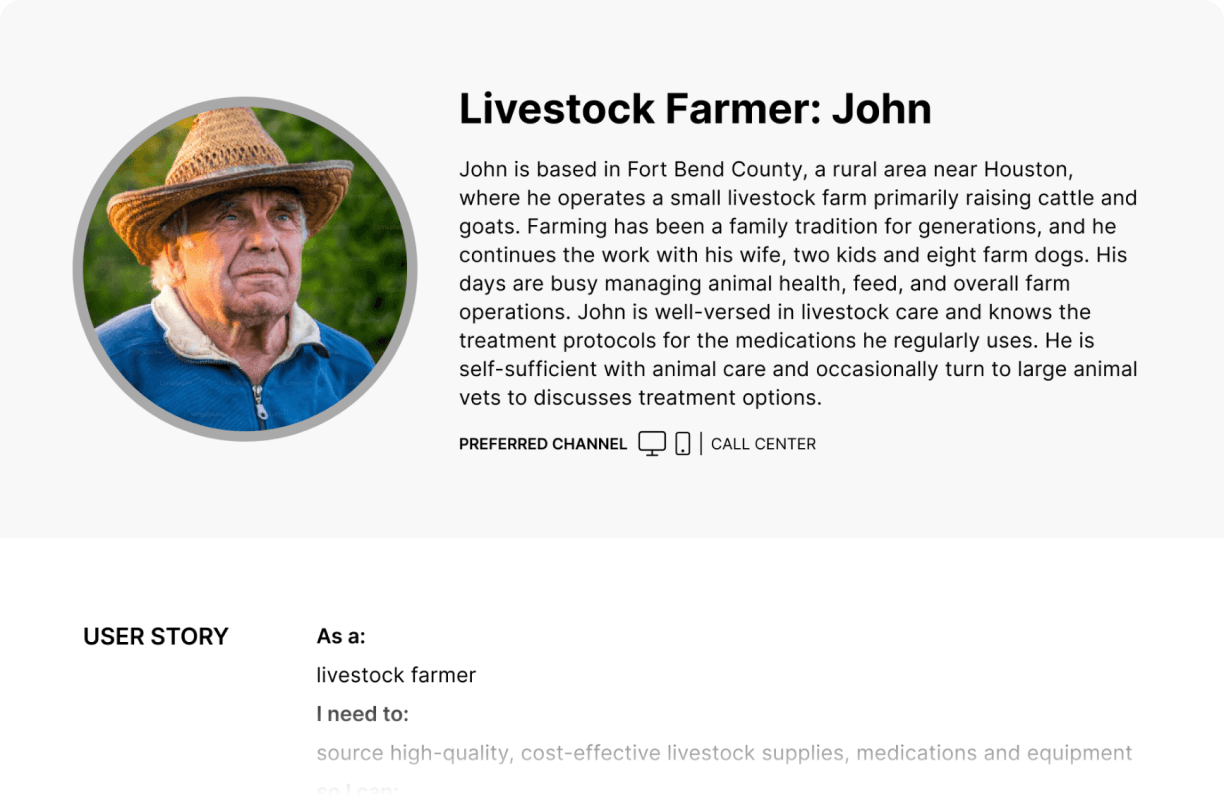
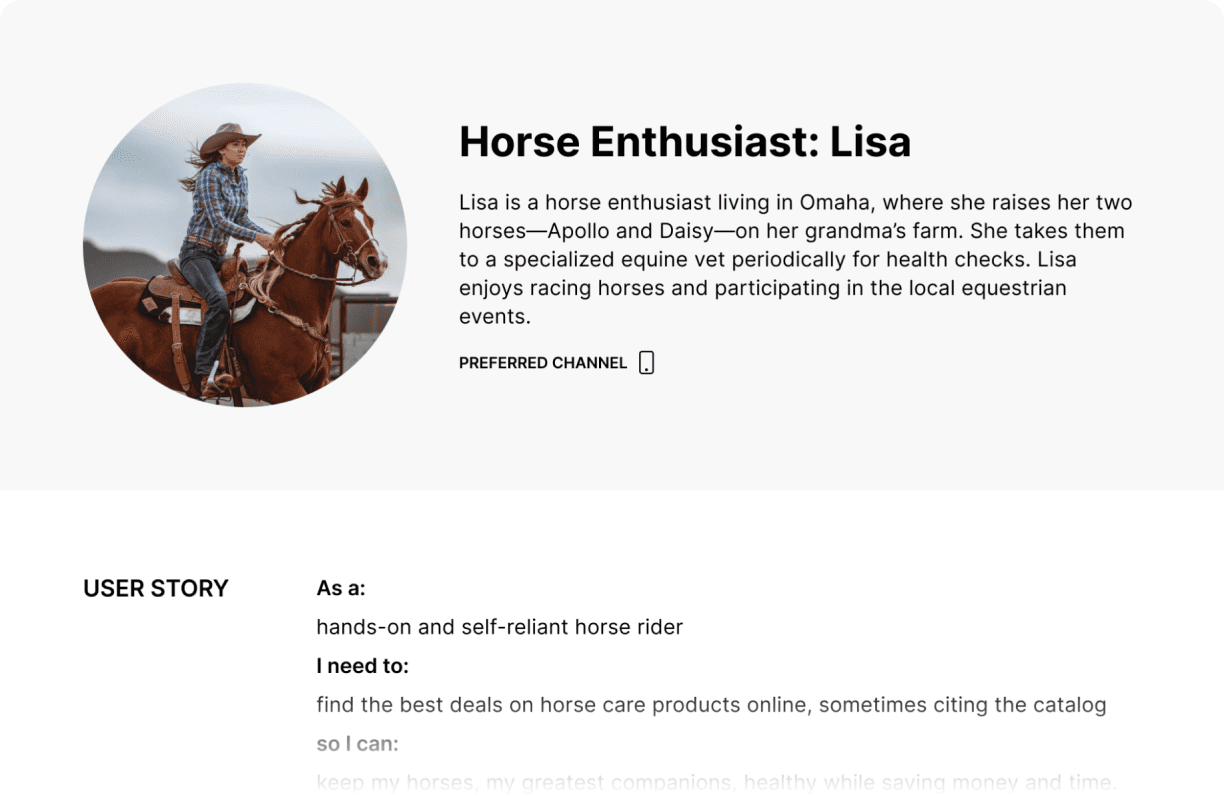
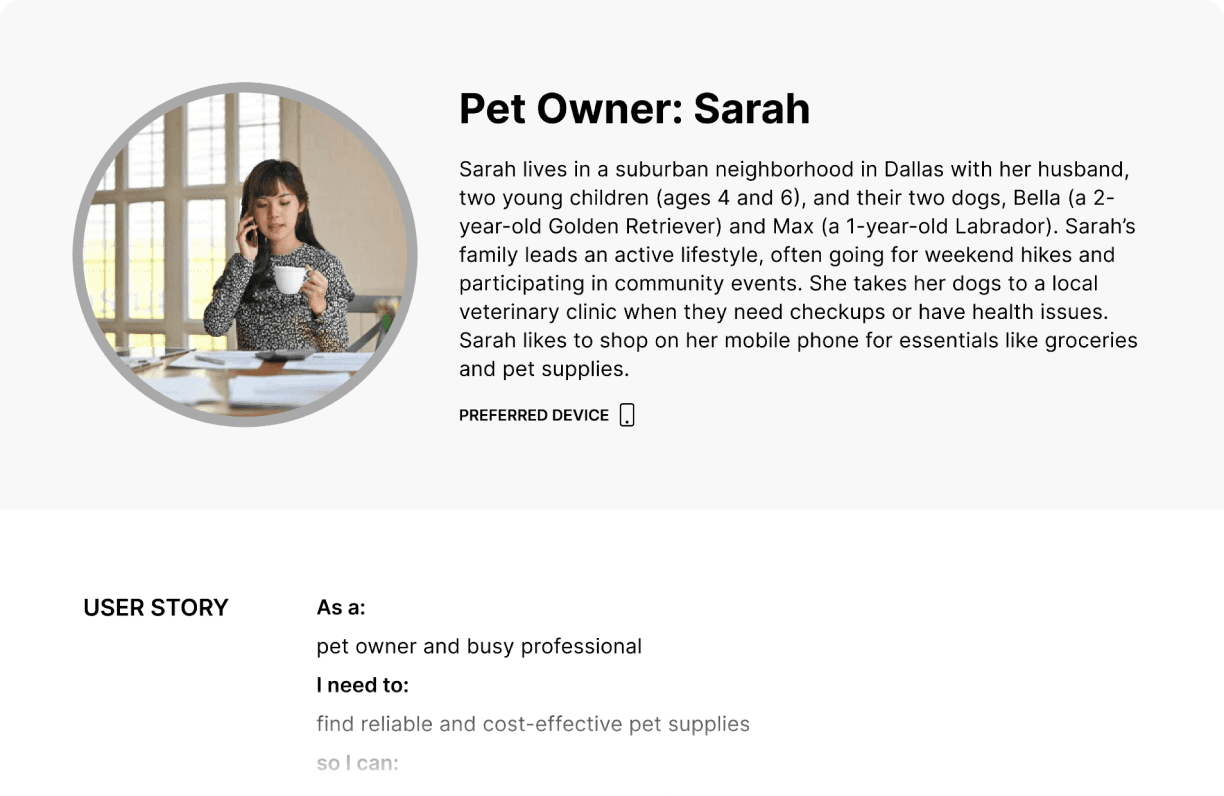
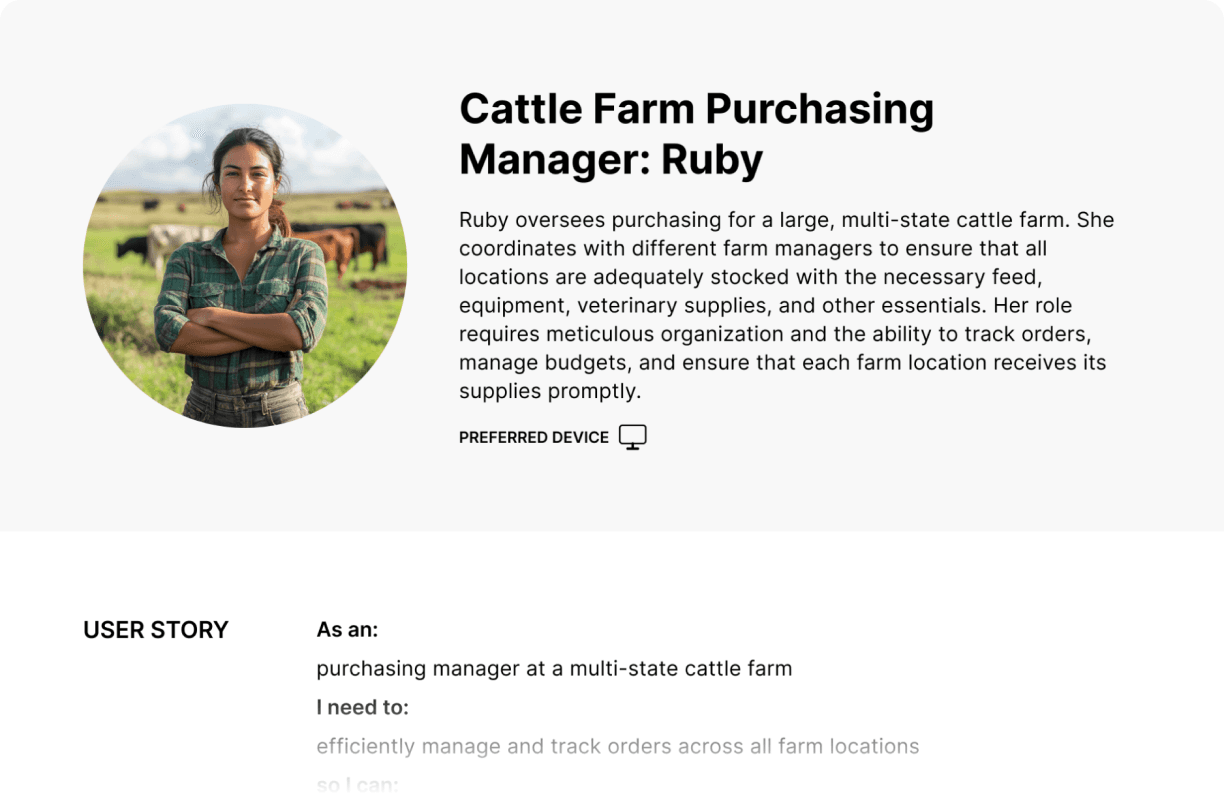
Early in the project, we realized we had an overwhelming amount of customer insights from Valley Vet’s service, marketing, and leadership teams. To make sense of it all and ensure we were truly aligned on who we were designing for, I created four personas.
These personas distilled our knowledge into clear archetypes and became a shared reference point for decision-making. They helped us validate our understanding with the client, reveal gaps in the customer picture, and give the redesign a grounded, customer-driven foundation.
Early in the project, we realized we had an overwhelming amount of customer insights from Valley Vet’s service, marketing, and leadership teams. To make sense of it all and ensure we were truly aligned on who we were designing for, I created four personas.
These personas distilled our knowledge into clear archetypes and became a shared reference point for decision-making. They helped us validate our understanding with the client, reveal gaps in the customer picture, and give the redesign a grounded, customer-driven foundation.
Early in the project, we realized we had an overwhelming amount of customer insights from Valley Vet’s service, marketing, and leadership teams. To make sense of it all and ensure we were truly aligned on who we were designing for, I created four personas.
These personas distilled our knowledge into clear archetypes and became a shared reference point for decision-making. They helped us validate our understanding with the client, reveal gaps in the customer picture, and give the redesign a grounded, customer-driven foundation.
Rebuilding the navigation
Rebuilding the navigation
Rebuilding the navigation
Audit insight
Audit insight
With alignment in place, I conducted a focused site audit to identify gaps and opportunities. Instead of auditing every screen, I analyzed three core user flows: product discovery, prescription refill, and checkout, through the lens of our primary personas.
With alignment in place, I conducted a focused site audit to identify gaps and opportunities. Instead of auditing every screen, I analyzed three core user flows: product discovery, prescription refill, and checkout, through the lens of our primary personas.
With alignment in place, I conducted a focused site audit to identify gaps and opportunities. Instead of auditing every screen, I analyzed three core user flows: product discovery, prescription refill, and checkout, through the lens of our primary personas.
Key insight
Navigation overwhelmed users instead of guiding them.
With tens of thousands of SKUs across pet, equine, and livestock categories, Valley Vet’s catalog was vast but its structure didn’t map to how customers actually look for items. Users often relied on search or customer support to find products buried under deep, inconsistent menus. I led the navigation overhaul, restructuring it around how customers actually shop.
Navigation overwhelmed users instead of guiding them.
With tens of thousands of SKUs across pet, equine, and livestock categories, Valley Vet’s catalog was vast but its structure didn’t map to how customers actually look for items. Users often relied on search or customer support to find products buried under deep, inconsistent menus. I led the navigation overhaul, restructuring it around how customers actually shop.
Navigation overwhelmed users instead of guiding them.
With tens of thousands of SKUs across pet, equine, and livestock categories, Valley Vet’s catalog was vast but its structure didn’t map to how customers actually look for items. Users often relied on search or customer support to find products buried under deep, inconsistent menus. I led the navigation overhaul, restructuring it around how customers actually shop.
Excerpt from site audit. I audited 3 core flows on the old valleyvet.com through the lens of the user personas.
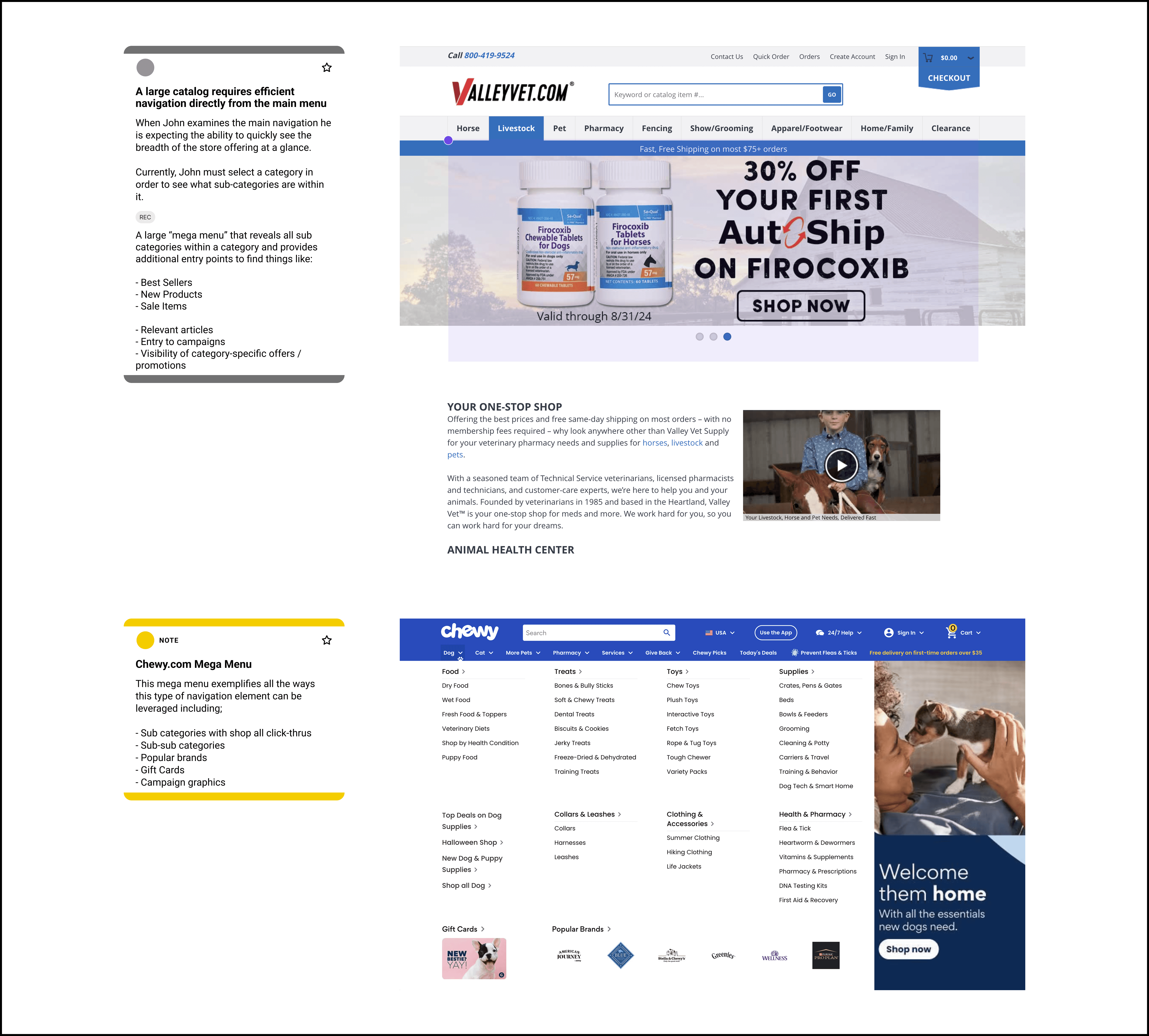
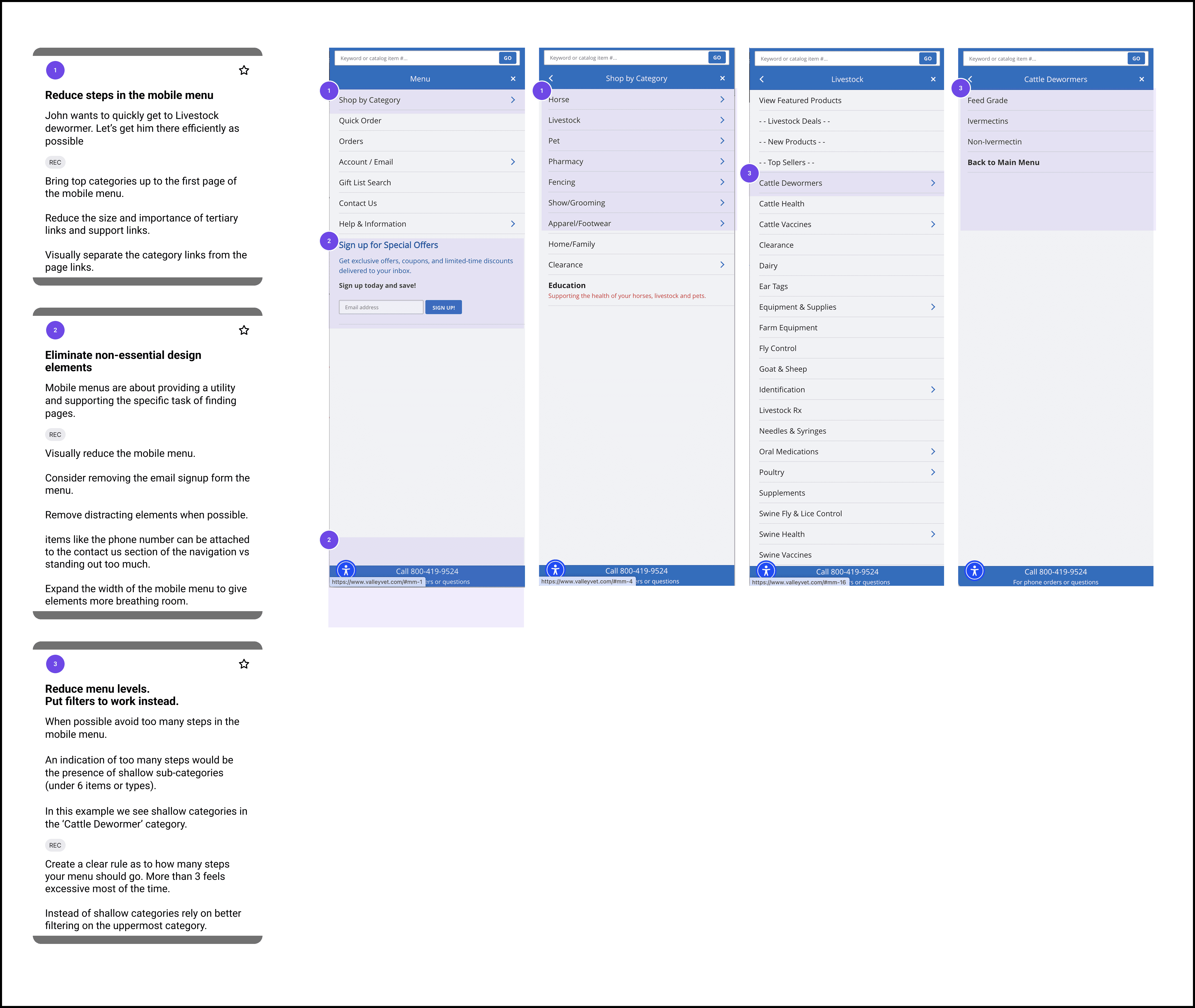
The new navigation introduced clearer hierarchies, customer-type pathways, and a simplified mega menu that made the experience intuitive for both first-time and returning visitors. Working closely with developers, I refined the structure to reduce build hours while maintaining usability and design integrity.
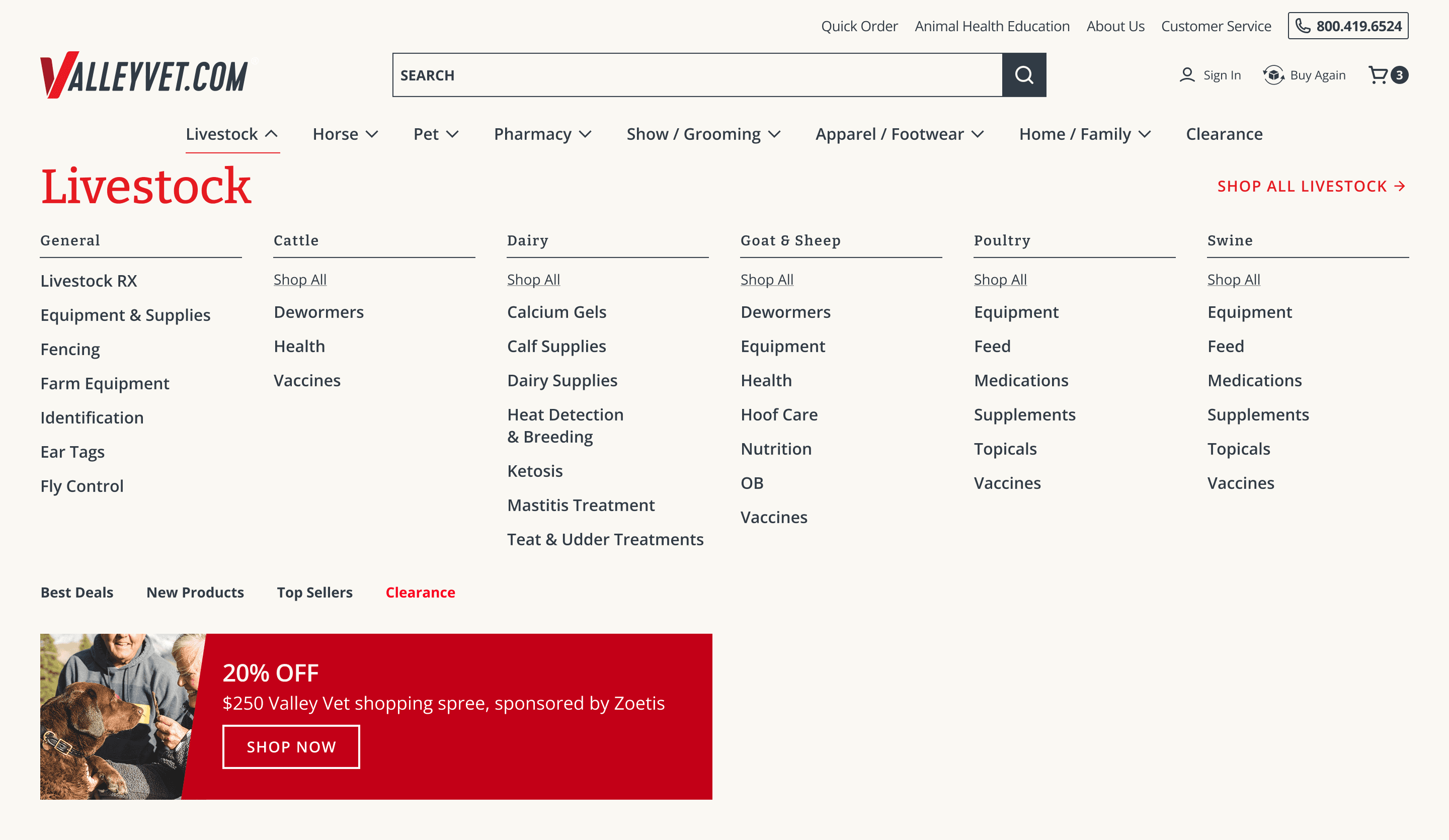
On desktop, I created 3 layout patterns for the seven shoppable categories. Because different categories had different levels of complexity, a single template wasn’t workable. I analyzed the overlaps, defined the simplest set of reusable patterns, and arrived at three variations that covered all categories.
The new navigation introduced clearer hierarchies, customer-type pathways, and a simplified mega menu that made the experience intuitive for both first-time and returning visitors. Working closely with developers, I refined the structure to reduce build hours while maintaining usability and design integrity.
On desktop, I created 3 layout patterns for the seven shoppable categories. Because different categories had different levels of complexity, a single template wasn’t workable. I analyzed the overlaps, defined the simplest set of reusable patterns, and arrived at three variations that covered all categories.
The new navigation introduced clearer hierarchies, customer-type pathways, and a simplified mega menu that made the experience intuitive for both first-time and returning visitors. Working closely with developers, I refined the structure to reduce build hours while maintaining usability and design integrity.
On desktop, I created 3 layout patterns for the seven shoppable categories. Because different categories had different levels of complexity, a single template wasn’t workable. I analyzed the overlaps, defined the simplest set of reusable patterns, and arrived at three variations that covered all categories.
Mega menu variation #1
The most complex variation. These categories include multiple animals or genders. A Shop All link is present if a landing page exists.
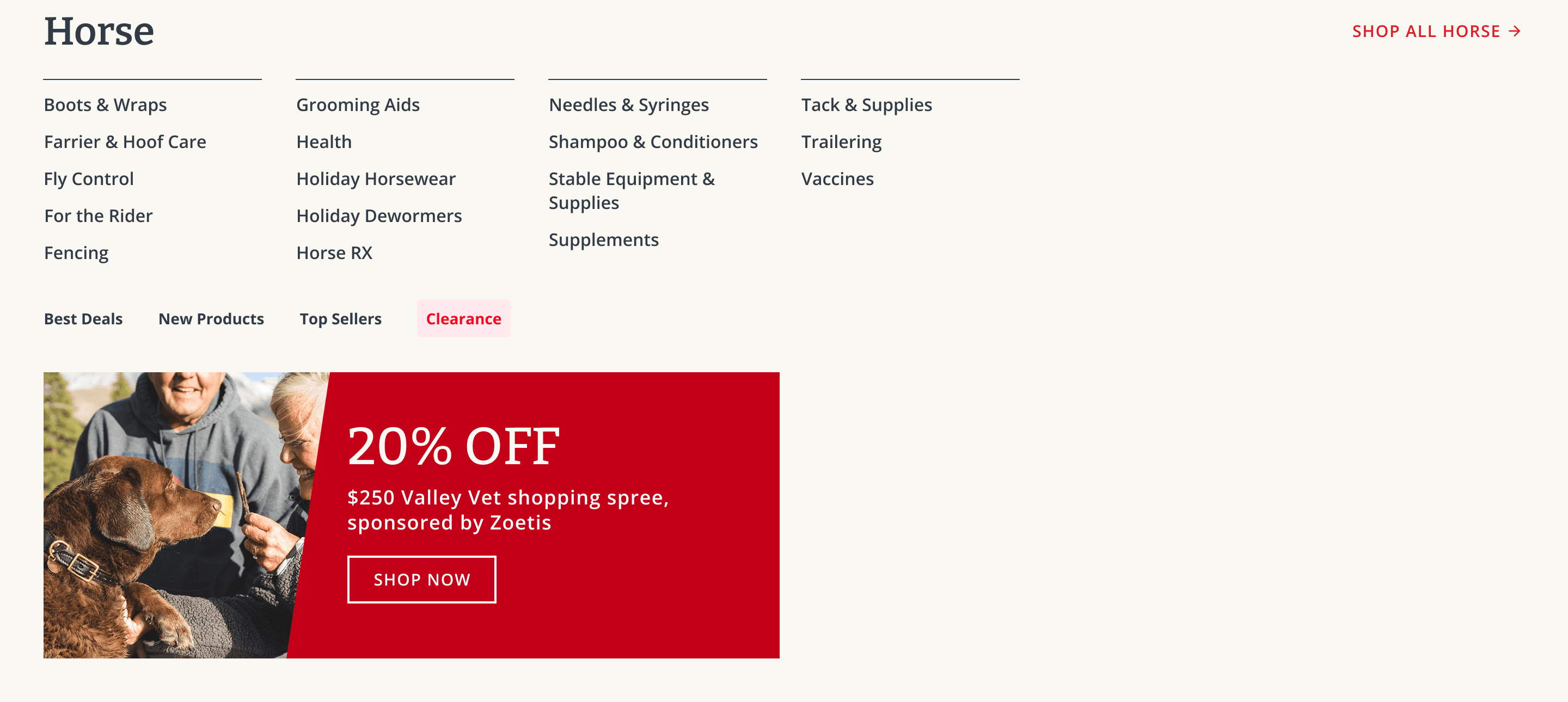
Mega menu variation #2
Used for simpler categories without intermediary groups.
Mega menu variation #3
Image–based categories make sections with fewer sub-categories easier to scan and more visually engaging.

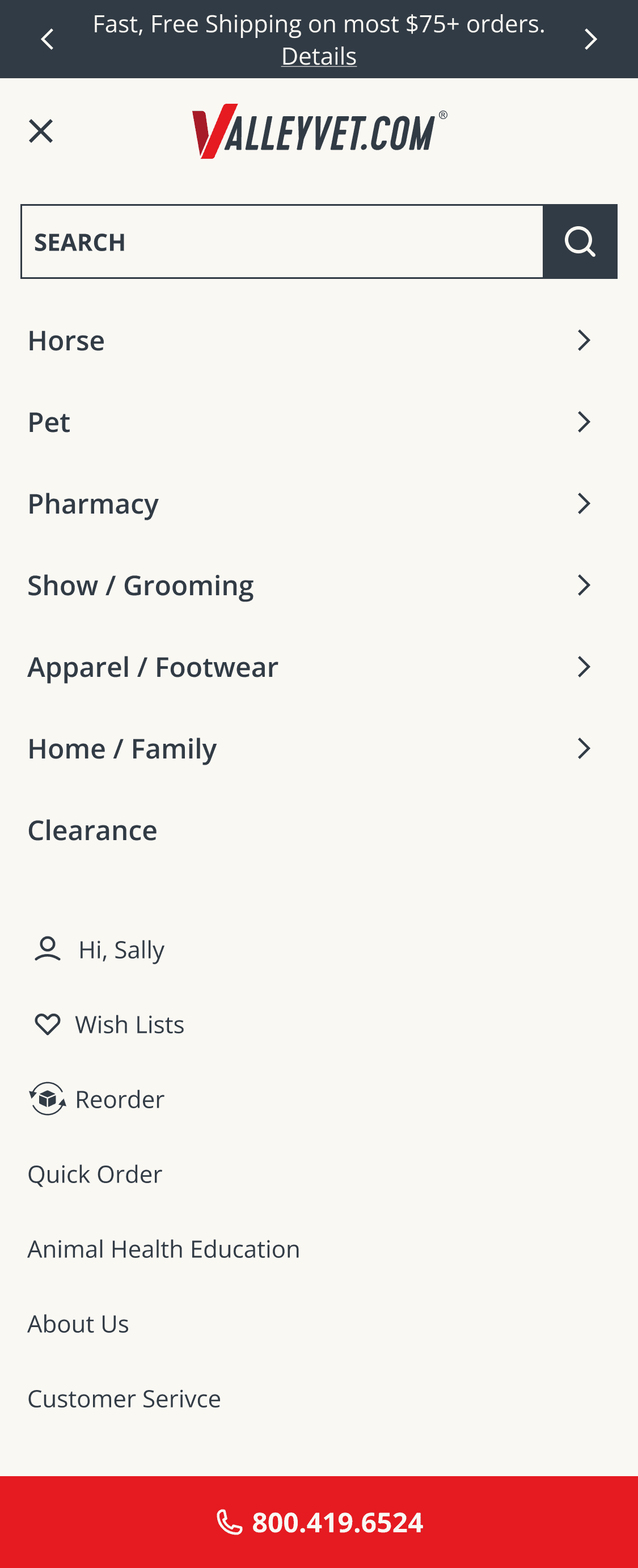
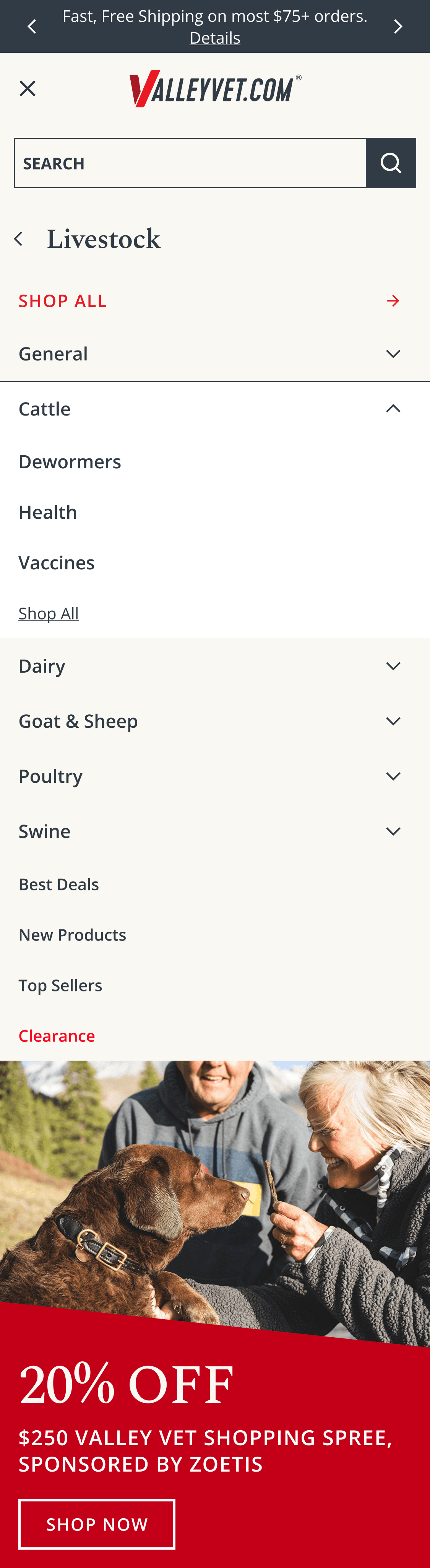
Mobile nav menu has 3 layers max

Design for Scale and Simplicity
Design for Scale and Simplicity
Design for Scale and Simplicity
Pain point
Pain point
One of the biggest challenges we encoutered was the volume of requirements on the BRD and edge cases. Designing for every possible combination of rules and data inputs without overwhelming users prompted me to build a modular design system that could adapt to complexity without looking complex.
One of the biggest challenges we encoutered was the volume of requirements on the BRD and edge cases. Designing for every possible combination of rules and data inputs without overwhelming users prompted me to build a modular design system that could adapt to complexity without looking complex.
One of the biggest challenges we encoutered was the volume of requirements on the BRD and edge cases. Designing for every possible combination of rules and data inputs without overwhelming users prompted me to build a modular design system that could adapt to complexity without looking complex.
Example
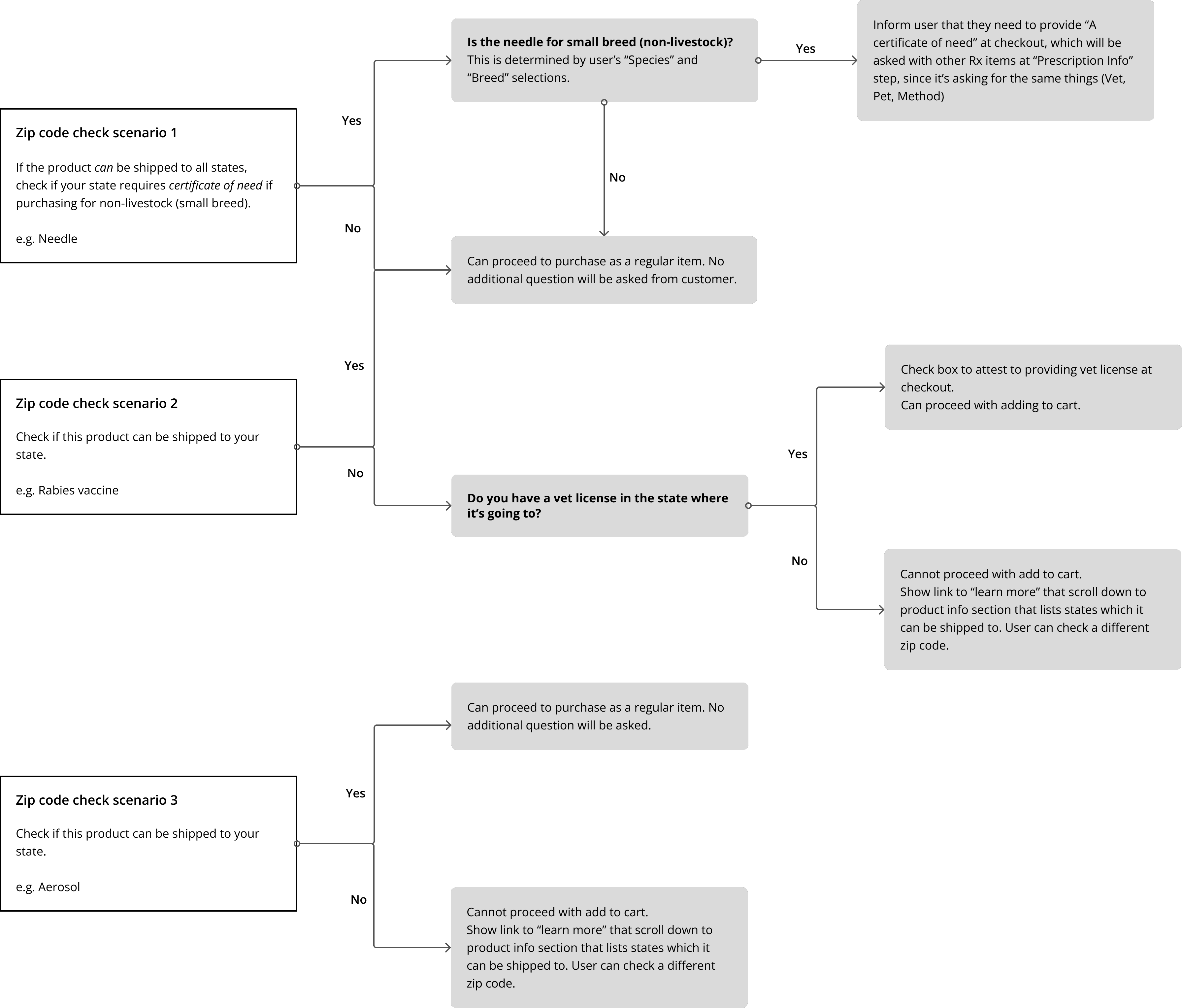
A good example is the shipping restriction flow. Certain products could only ship to specific states or required prescriptions. I mapped every variation in a detailed flowchart, studied the database dependencies, and designed an interface that grouped overlapping conditions. This reduced redundancy and minimized the number of unique interface states developers needed to build.
A good example is the shipping restriction flow. Certain products could only ship to specific states or required prescriptions. I mapped every variation in a detailed flowchart, studied the database dependencies, and designed an interface that grouped overlapping conditions. This reduced redundancy and minimized the number of unique interface states developers needed to build.
A good example is the shipping restriction flow. Certain products could only ship to specific states or required prescriptions. I mapped every variation in a detailed flowchart, studied the database dependencies, and designed an interface that grouped overlapping conditions. This reduced redundancy and minimized the number of unique interface states developers needed to build.
I created a flow chart to identify the different scenarios and the flows that can be shared across them.
The outcome: a scalable, maintainable system that feels effortless to navigate, even as business logic remains intricate behind the scenes.
The outcome: a scalable, maintainable system that feels effortless to navigate, even as business logic remains intricate behind the scenes.
The outcome: a scalable, maintainable system that feels effortless to navigate, even as business logic remains intricate behind the scenes.
Shipping restriction is designed to be modular, UI swaps according to user's answer to questions. Example here is the scenario 1.
Create moments of empathy
Create moments of empathy
Create moments of empathy
Emotional impact
Emotional impact
One functional requirement enables users to delete pet profiles when an animal passed away. It was a small feature, but I sensed emotional weight behind it. I spoke with a friend who had lost her pet to understand how this would make them feel, I learned that either keeping or deleting, carried emotional discomfort.
This led me to design Profiles in Loving Memory feature, which allows users to move a pet profile into a dedicated accordion section instead of deleting it. These profiles no longer appear in active dropdowns but remain accessible for past order history, a quiet, dignified design choice that balances emotion and practicality.
One functional requirement enables users to delete pet profiles when an animal passed away. It was a small feature, but I sensed emotional weight behind it. I spoke with a friend who had lost her pet to understand how this would make them feel, I learned that either keeping or deleting, carried emotional discomfort.
This led me to design Profiles in Loving Memory feature, which allows users to move a pet profile into a dedicated accordion section instead of deleting it. These profiles no longer appear in active dropdowns but remain accessible for past order history, a quiet, dignified design choice that balances emotion and practicality.
One functional requirement enables users to delete pet profiles when an animal passed away. It was a small feature, but I sensed emotional weight behind it. I spoke with a friend who had lost her pet to understand how this would make them feel, I learned that either keeping or deleting, carried emotional discomfort.
This led me to design Profiles in Loving Memory feature, which allows users to move a pet profile into a dedicated accordion section instead of deleting it. These profiles no longer appear in active dropdowns but remain accessible for past order history, a quiet, dignified design choice that balances emotion and practicality.
It’s a small moment that exemplifies designing for real human emotion, even within a large-scale e-commerce system.
Reflection
Reflection
Valley Vet Supply is one of the most complex projects I’ve worked on. Three teams partnered over ten months to replatform a site with more than 40,000 SKUs, 1.5 million annual shipments, and over 370,000 customers. The new site is now in its final production phase and is expected to go live in January 2026.
One of my biggest takeaways from this project is the role of design artifacts. I used to see them mainly as a step in the design process, but this project showed me how powerful they are as tools for shared understanding. With so much information coming from the Valley Vet team, I created artifacts like user personas and the site audit not only to guide design, but to reflect back what we understood. This helped the client confirm what was accurate, correct what wasn’t, and make sure we were fully aligned.
Walking through the personas and audit together also helped us separate what the site needs now from what belongs in future B2B-focused phases, and gave us clear customer archetypes to reference whenever we hit blockers or tough decisions.
Taking time to workshop and align early built the trust we needed for a project of this scale, and made the rest of the process much smoother.
Valley Vet Supply is one of the most complex projects I’ve worked on. Three teams partnered over ten months to replatform a site with more than 40,000 SKUs, 1.5 million annual shipments, and over 370,000 customers. The new site is now in its final production phase and is expected to go live in January 2026.
One of my biggest takeaways from this project is the role of design artifacts. I used to see them mainly as a step in the design process, but this project showed me how powerful they are as tools for shared understanding. With so much information coming from the Valley Vet team, I created artifacts like user personas and the site audit not only to guide design, but to reflect back what we understood. This helped the client confirm what was accurate, correct what wasn’t, and make sure we were fully aligned.
Walking through the personas and audit together also helped us separate what the site needs now from what belongs in future B2B-focused phases, and gave us clear customer archetypes to reference whenever we hit blockers or tough decisions.
Taking time to workshop and align early built the trust we needed for a project of this scale, and made the rest of the process much smoother.
Valley Vet Supply is one of the most complex projects I’ve worked on. Three teams partnered over ten months to replatform a site with more than 40,000 SKUs, 1.5 million annual shipments, and over 370,000 customers. The new site is now in its final production phase and is expected to go live in January 2026.
One of my biggest takeaways from this project is the role of design artifacts. I used to see them mainly as a step in the design process, but this project showed me how powerful they are as tools for shared understanding. With so much information coming from the Valley Vet team, I created artifacts like user personas and the site audit not only to guide design, but to reflect back what we understood. This helped the client confirm what was accurate, correct what wasn’t, and make sure we were fully aligned.
Walking through the personas and audit together also helped us separate what the site needs now from what belongs in future B2B-focused phases, and gave us clear customer archetypes to reference whenever we hit blockers or tough decisions.
Taking time to workshop and align early built the trust we needed for a project of this scale, and made the rest of the process much smoother.